Trampa - Goods Trading Platform
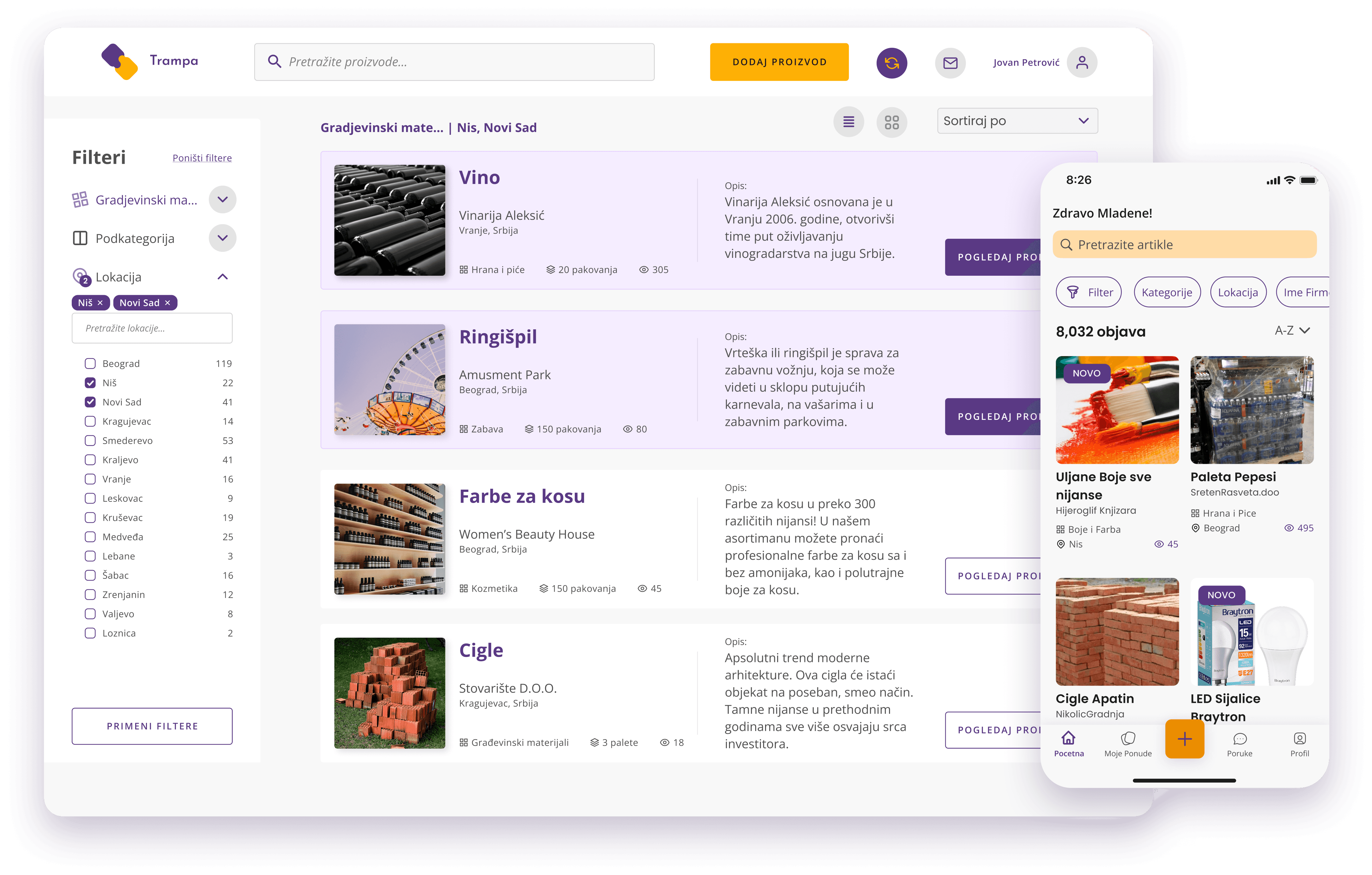
A local business owner expressed dissatisfaction with the current lack of effective collaboration tools for similar small businesses. In response, they proposed a partnership to develop software that would facilitate trading of surplus goods among small businesses. The goal is to foster a sense of community and extend this network throughout the entire region.

Product & Brand Designer
3 Months
Branding
User Research
Product Design
Challenge
Small businesses primarily operate on trust and rely heavily on referrals. As a result, their network remains limited and segmented. Communication and inventory assessment among them are currently carried out through phone calls, messages, and face-to-face meetings. The sole existing B2B marketplace functions as a closed group within a messaging app. Business owners have grown accustomed to this inefficient mode of collaboration, so introducing a new tool would likely be met with resistance.
Results
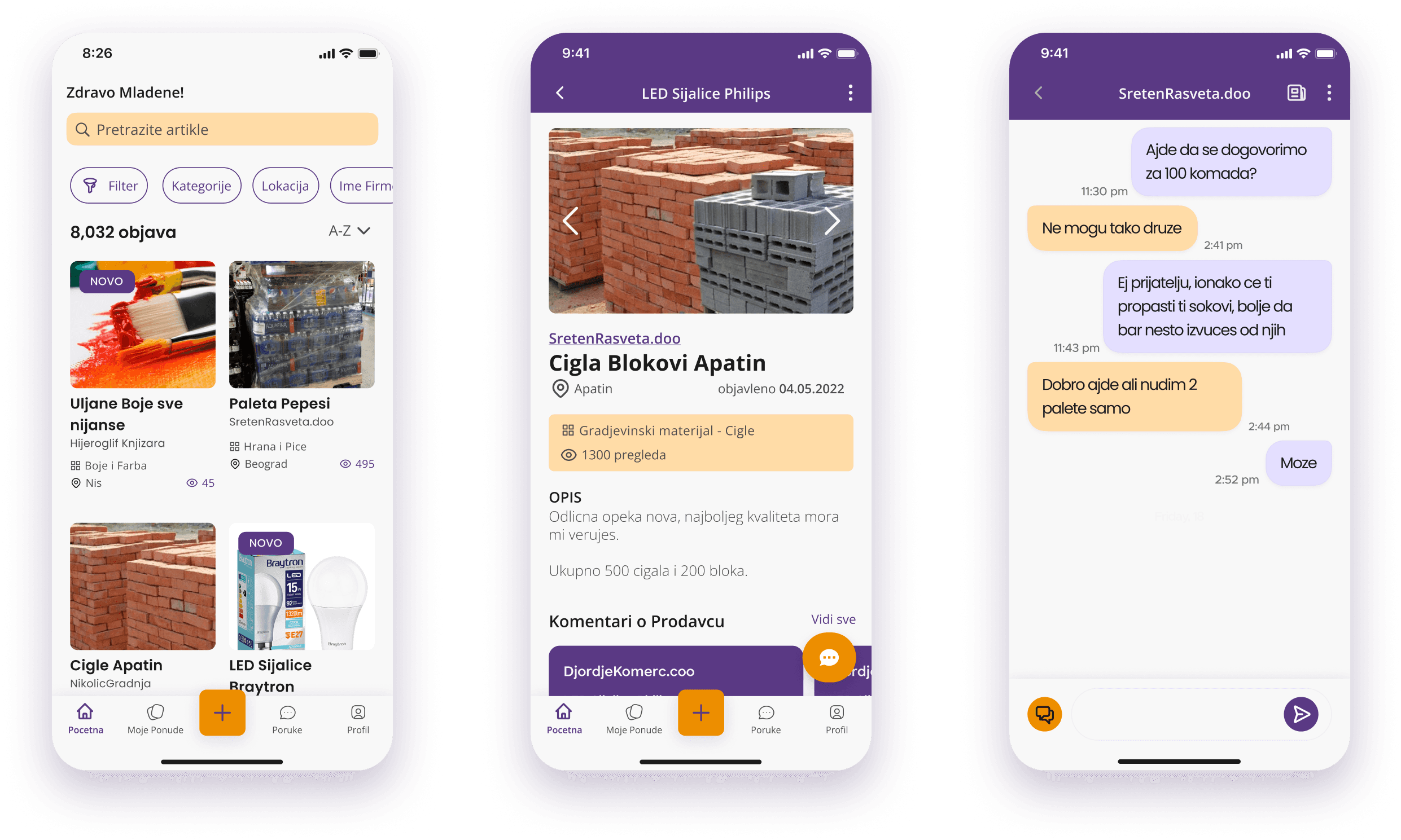
We have developed a B2B (MVP) Marketplace designed to empower small businesses by facilitating the listing and trading of surplus or needed goods. This network has significantly grown to encompass business owners across the entire country. As a result of this extensive trading platform, users have conveyed a remarkable reduction – by a third of their total – in the disposal of products that have reached their expiration date.
Process
Research & Analysis
Our research initiative commenced by conducting interviews with the partner and their close colleagues. This step aimed to obtain a comprehensive overview of the tasks at hand. Building upon this foundation, we proceeded to broaden our interview scope to encompass similar local businesses. This extension served as a means to validate the demand for the product described by our partner.
Within our research, we noted the absence of direct competition. This observation was rooted in the fact that the existing players predominantly centered their operations around individual customers, emphasizing transactions involving the buying and selling of goods, rather than fostering a platform for the exchange of goods through trading.




Branding
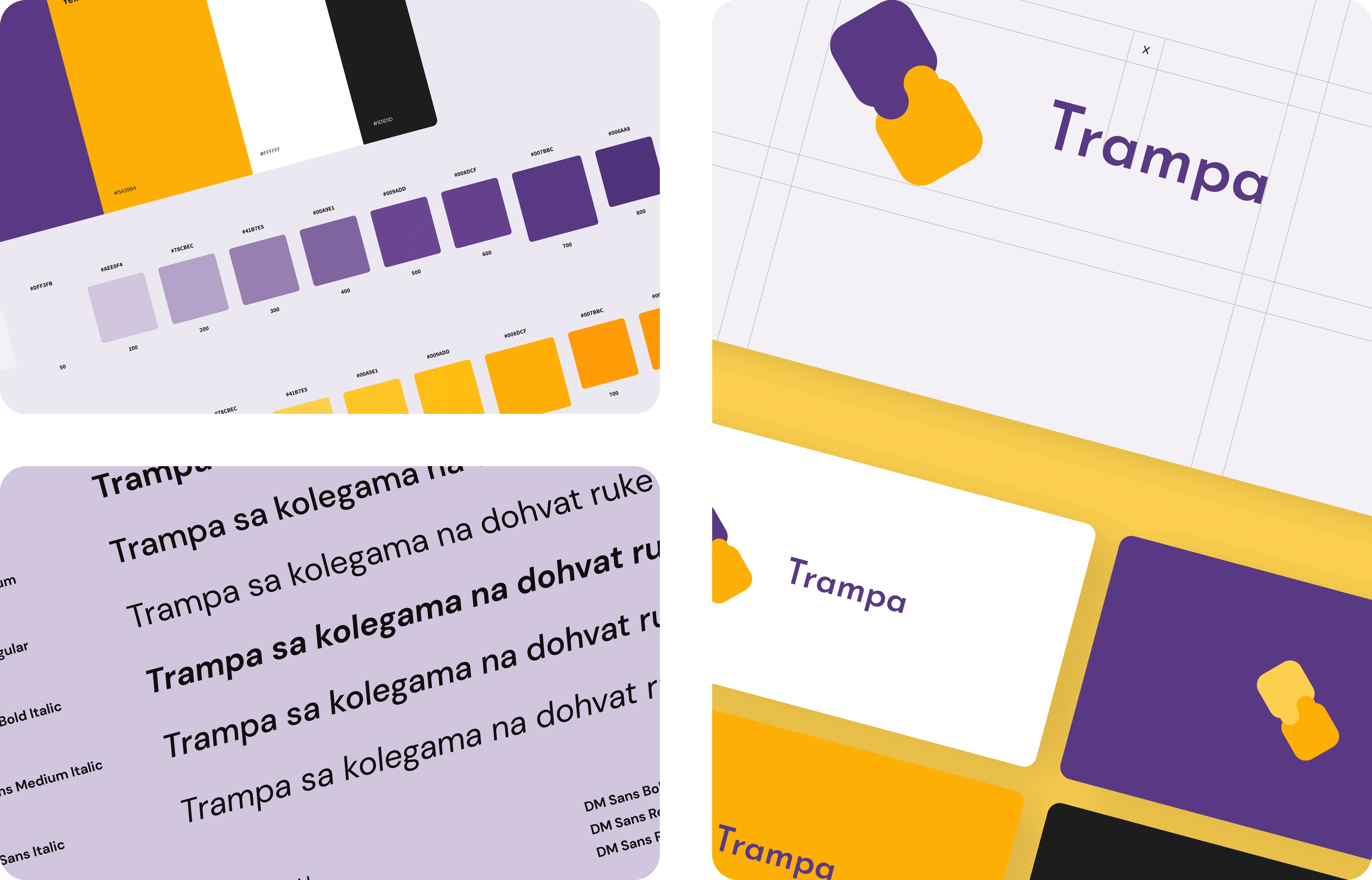
Our brand vision revolved around creating a user-friendly and straightforward experience, reflecting a wholesome and amicable community where transparent trading would be advantageous for all involved parties. We employed soft, rounded shapes to evoke a sense of approachability and serenity. The choice of warm yellows was intended to capture the platform's inviting nature and the positive demeanor of its users. Additionally, the introduction of the color purple was strategically incorporated to serve as a gentle nudge to potential users, inviting them to explore the distinctive use cases that this platform offers.
Exploration / Wireframing
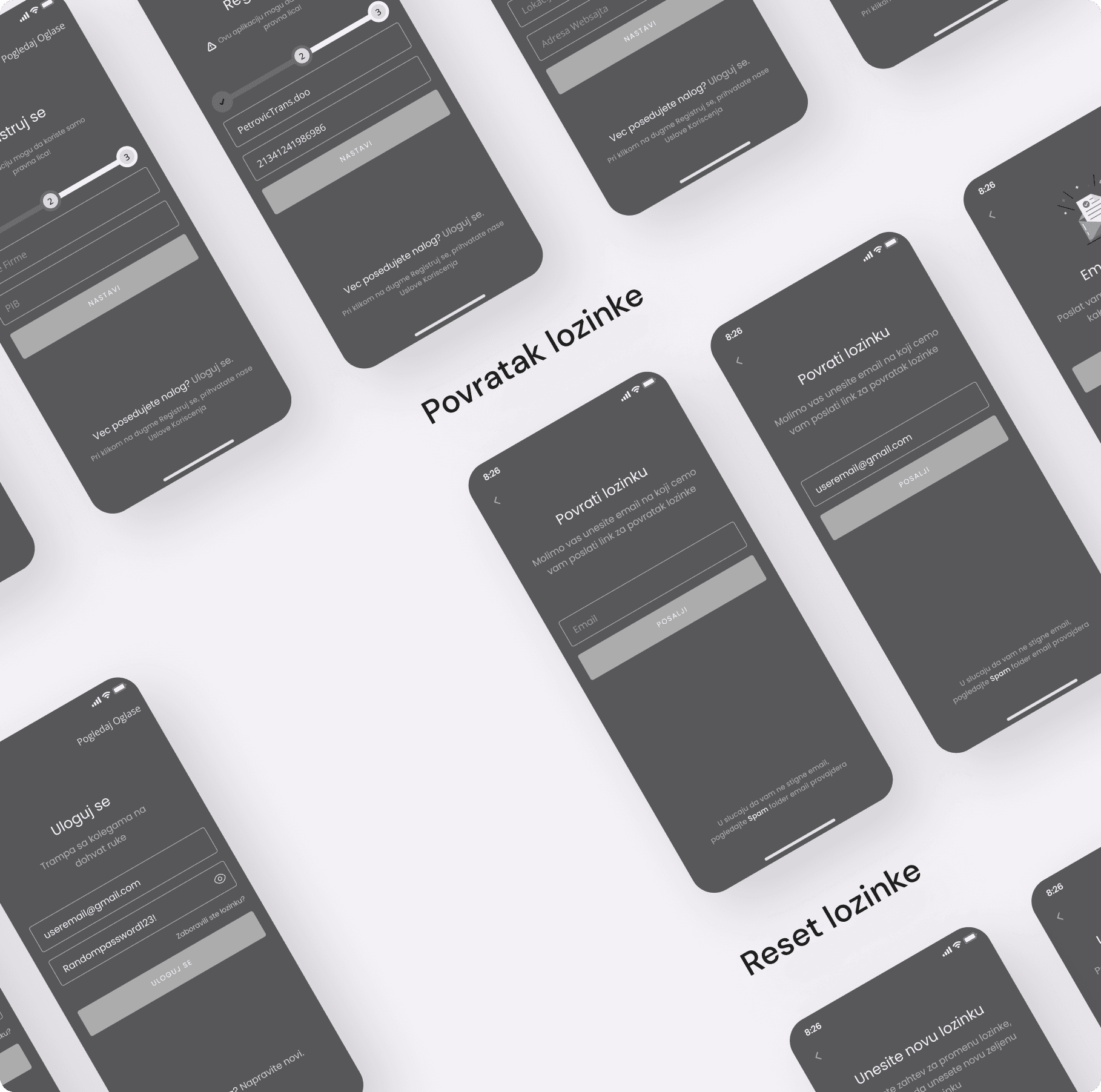
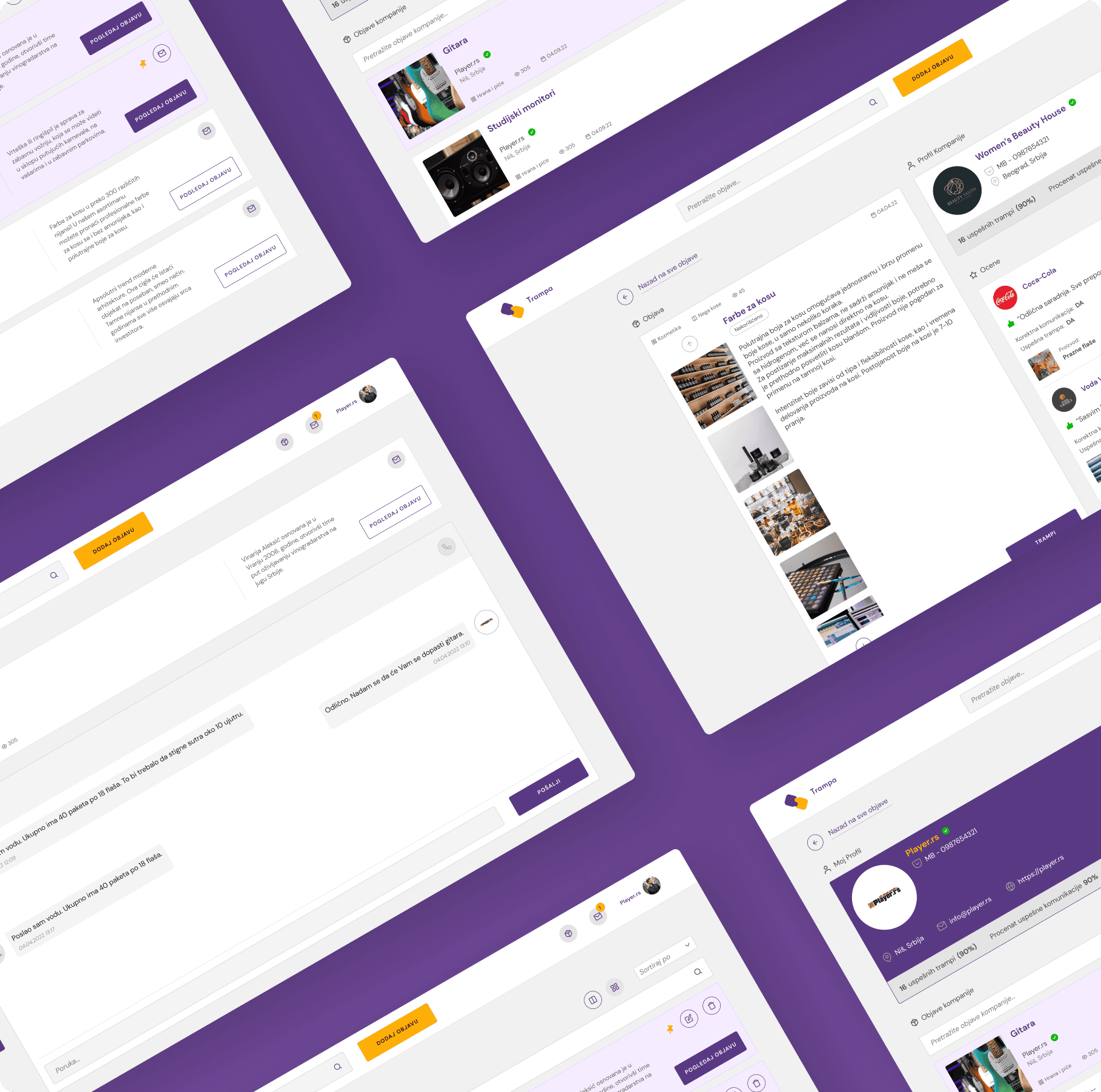
Upon completing thorough research and establishing a robust brand foundation, we commenced the process of creating mock-ups for the mobile application. However, the trajectory of our development journey took a turn when the product owners determined that prioritizing the web version was essential. Consequently, we shifted our attention to finalizing the web design first.
Despite this shift in focus, it's important to note that the mobile app remained well within the scope of the MVP. Thus, once the web design had been successfully completed, we seamlessly transitioned back to crafting the mobile app to ensure its alignment with our comprehensive vision.
Conclusion
Once the MVP had been meticulously prepared and was poised for the development phase, circumstances led me to step away from the design team. This decision was influenced by commitments to other ongoing projects that demanded my attention.
Fortunately, by the time I left the team, the partner had expressed genuine satisfaction with the ultimate design outcome. This sentiment was shared by our team as well. The sense of accomplishment derived from seeing the design reach a point of readiness for development was truly rewarding.